




On December 11, 2025, the Austrian National Council passed the 5th Mietrechtliche Inflationslinderungsgesetz (5. MILG) — the fifth law to mitigate inflationary pressure on rent. This law, which takes effect on January 1, 2026, introduces the most comprehensive reform of the rental market in decades. For the first time in the history of the Second Republic, the state intervenes in so-called “free rents” — a market segment that was previously unregulated.
For tenants, the reform promises significant relief: according to government estimates, savings in 2026 alone will amount to approximately 207 million euros. For property owners and investors, these are new rules of the game that require careful analysis and strategy adaptation. If you are planning to rent an apartment in Vienna or purchase property in Austria, understanding the new rules is critically important for making informed decisions.
What Changes from January 1, 2026?
At the heart of the reform is the new Mieten-Wertsicherungsgesetz (MieWeG) — the Rent Indexation Act. It establishes uniform rules for the entire residential rental market in Austria, including the previously unregulated free rent segment.
Key Innovations
1. Rent Indexation Cap. The so-called “Hälfteregelung” (half rule) is introduced: if inflation exceeds 3%, the landlord can pass on only half of the excess to the tenant. For example, at 6% inflation, the maximum rent increase would be 4.5% (3% base + half of the 3% excess). This differs significantly from the previous situation where landlords could fully pass on inflation to tenants.
2. Single Indexation Date. Rent increases are now only possible once a year, and no earlier than April 1. This means landlords can no longer implement multiple increases throughout the year. According to Wirtschaftskammer Österreich, this creates greater predictability for both tenants and landlords.
3. Extended Minimum Lease Term. For professional landlords (as defined by the Consumer Protection Act — KSchG), the minimum term for fixed-term leases increases from 3 to 5 years. Private landlords with a small number of properties are exempt — they retain the 3-year minimum. This is particularly relevant for those considering short-term rentals in Vienna.
4. Limitation on Retroactive Claims. The statute of limitations for recovering overpaid rent due to invalid indexation clauses is reduced from potentially 30 years to 5 years. This creates legal certainty for both parties, as confirmed by Mieterschutzverband Österreich.
Differentiated Rules for Different Rental Types
The law establishes different restrictions depending on the type of rental relationship. The strictest rules apply to the regulated sector — Altbau (old buildings), municipal and cooperative housing.
| Rental Type | Max +2026 | Max +2027 | From 2028 |
| Richtwert / Kategorie | 1% | 2% | Formula 3%+½ |
| Angemessener Mietzins | 1% | 2% | Formula 3%+½ |
| Free Market (freie Mieten) | Formula 3%+½ | Formula 3%+½ | Formula 3%+½ |
Regulated Sector (Richtwert and Kategorie Rents)
For Altbau, municipal apartments (Gemeindewohnungen), and cooperative housing (Genossenschaftswohnungen), a phased restriction has been established. Recall that in 2025, rent in this sector was completely frozen according to 4. MILG. Now, from April 1, 2026, the maximum increase will be only 1%. From April 1, 2027 — maximum 2%. And only from April 1, 2028 will the general formula “3% + half of excess” take effect.
Free Market (freie Mieten)
This is truly a historic moment: for the first time in Austrian history, the state intervenes in free market rents. This category includes new constructions (built after 1945), large apartments over 130 m², some service apartments, and rented private houses.
For this segment, the “3% + half of excess” formula applies from 2026. This means that even in new buildings, landlords cannot pass on full inflation to tenants.
Exception: The law does not apply to single and two-family houses (Ein- und Zweifamilienhäuser). Rental relationships there remain unregulated. If you are considering buying or renting a house in Vienna, this information is particularly important.
How the New Formula Works: Specific Calculations
The new indexation formula (“Hälfteregelung”) is the key element of the reform. According to the official text of the law published on the Federal Ministry of Justice website, it works as follows.
Basic Formula: If inflation ≤ 3%, rent can increase by the full amount of inflation. If inflation > 3%, maximum increase = 3% + (inflation – 3%) ÷ 2.
| Inflation | Without MieWeG | With MieWeG | Savings |
| 4% | +4% | +3.5% | 0.5% |
| 5% | +5% | +4% | 1% |
| 6% | +6% | +4.5% | 1.5% |
| 8% | +8% | +5.5% | 2.5% |
Example: The Muller Family in a New Building
Imagine a family renting a three-room apartment of 80 m² in a new building in Vienna’s 22nd district (Donaustadt). Their current rent is €1,200 per month, or €14,400 per year.
Suppose inflation in 2025 is 4.1% (current estimate by Statistik Austria). Without MieWeG, the landlord could increase rent by the full 4.1%, i.e., €590 per year (€49 per month). With the new formula: maximum increase = 3% + (4.1% – 3%) ÷ 2 = 3.55%. This means an increase of €511 per year (€43 per month). The Mullerfamily’s savings: €79 per year.
That may not seem like much. But if inflation rises to 6% (as it did in 2023), savings would be €180 per year. At 8% inflation (as in 2022) — savings of €300 per year. It is precisely during periods of high inflation that the new formula demonstrates its effectiveness.
Example: Mr. Alexander in an Altbau Apartment
Mr. Alexander rents a two-room apartment of 65 m² in a 1920s building in Vienna’s 6th district (Mariahilf). His current rent under the Richtwertmiete system is €650 per month.
For the regulated sector in 2026, a stricter limit applies — maximum 1%. This means Mr. Alexander’s rent can only increase by €6.50 per month, or €78 per year — regardless of what the actual inflation is. If inflation were 4%, without restrictions the increase would be €312 per year. Mr. Alexander’s savings: €234 per year in 2026 alone.
Important Dates and Transition Period
January 1, 2026: 5. MILG and MieWeG take effect. New rules apply to all existing and new lease agreements with indexation clauses.
April 1, 2026: Earliest possible date for rent increases. For the regulated sector — maximum 1%.
April 1, 2027: Next indexation date. For the regulated sector — maximum 2%.
April 1, 2028: The unified “3% + half” formula takes effect for all rental types.
Important for Existing Contracts: The law applies to contracts concluded before January 1, 2026 as well. This means landlords must recalculate all future indexations according to the new rules. The “parallel calculation” principle applies: if the contractual clause provides for a smaller increase than the law allows, the contractual clause applies. More details are available at Arbeiterkammer Wien.
New Rules for Fixed-Term Lease Agreements
In addition to indexation limits, the reform significantly changes the rules for fixed-term lease agreements. This is particularly important given that about 75% of new private lease agreements in Austria are concluded for a fixed term.
For professional landlords (companies, investment funds, persons owning more than 5 properties), the minimum term for fixed-term contracts increases from 3 to 5 years. This means tenants receive more stability and protection from sudden eviction. More information about tenant rights is available at Mietervereinigung Österreich.
Exception for Private Landlords: So-called “small landlords” (kleine Vermieter) who are not entrepreneurs under the Consumer Protection Act can still conclude 3-year contracts. This applies to private individuals with a small number of properties.
Tenant’s Right to Early Termination: Importantly, the tenant’s right to terminate the contract early remains unchanged under the Mietrechtsgesetz (MRG). This means the tenant can move out earlier by giving the legally required notice, even if the contract is for 5 years.
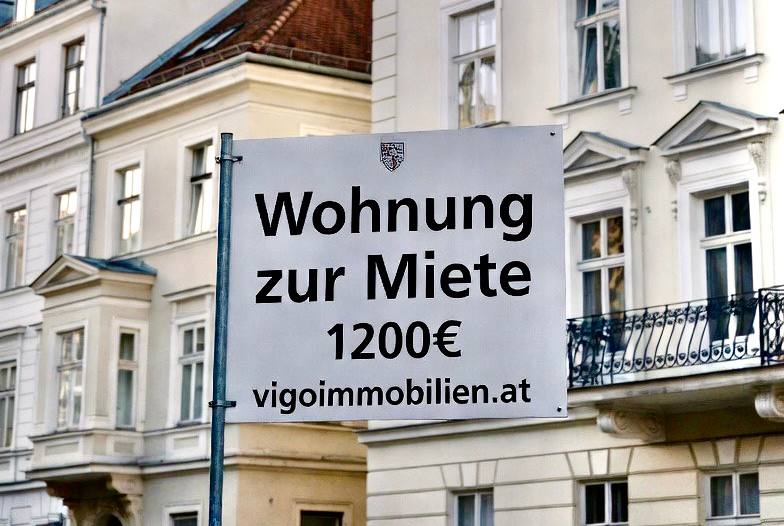
What This Means for Owners and Investors
For those planning to invest in Austrian real estate, the new rules mean a need to recalculate expected returns. This especially applies to new constructions, which were previously unregulated.
At the same time, the reform has positive aspects for owners. The Trust Account (BTVG) continues to protect investors in new constructions, and stable rules reduce the risk of rent non-payment since tenants don’t face sudden cost increases.
If you’re considering purchasing property, it’s also important to consider the energy efficiency of the buildingand options for obtaining a mortgage in Austria, as financing conditions also changed from July 1, 2025.
Practical Advice for Tenants and Landlords
For Tenants
Check your lease agreement: does it contain an indexation clause (Wertsicherungsklausel)? If so, the new restrictions automatically apply to you. If the landlord demands a rent increase, request written justification with calculation according to the new formula. You can verify information about your apartment in the Grundbuch (land register).
Remember that increases are possible no earlier than April 1 and only once a year. If the landlord attempts to increase rent earlier or more frequently, this is a violation of the law. If in doubt, contact Mietervereinigungor Arbeiterkammer.
If you’re signing a new fixed-term contract with a professional landlord, it must be at least 5 years. A shorter term is invalid and automatically converts the contract to an indefinite one.
For Owners and Investors
Review all existing lease agreements and indexation clauses. From January 1, 2026, the new calculation formula must be applied. Incorrect increases can lead to repayment claims. If you’re planning renovations in Vienna, note that this may affect rental value.
Pay attention to new requirements for minimum fixed-term contract duration. If you are a professional landlord, contracts shorter than 5 years are no longer valid. An alternative may be considering commercial real estate or purchasing property at auction (Zwangsversteigerung).
Conclusion
Mietpreisbremse 2026 is an unprecedented reform of Austria’s rental market. For the first time in history, the state sets limits on free market rents, introduces a unified indexation formula, and extends minimum lease terms.
For tenants, this means greater protection from sharp rent increases during periods of high inflation and more stability in fixed-term contracts. For owners — the need to adapt expectations and recalculate financial models.
Vienna’s real estate market continues to evolve. The VigoImmobilien team closely monitors all legislative changes and is ready to help you understand how the new rules affect your situation — whether you’re a tenant, owner, or investor. Contact us for consultation.


